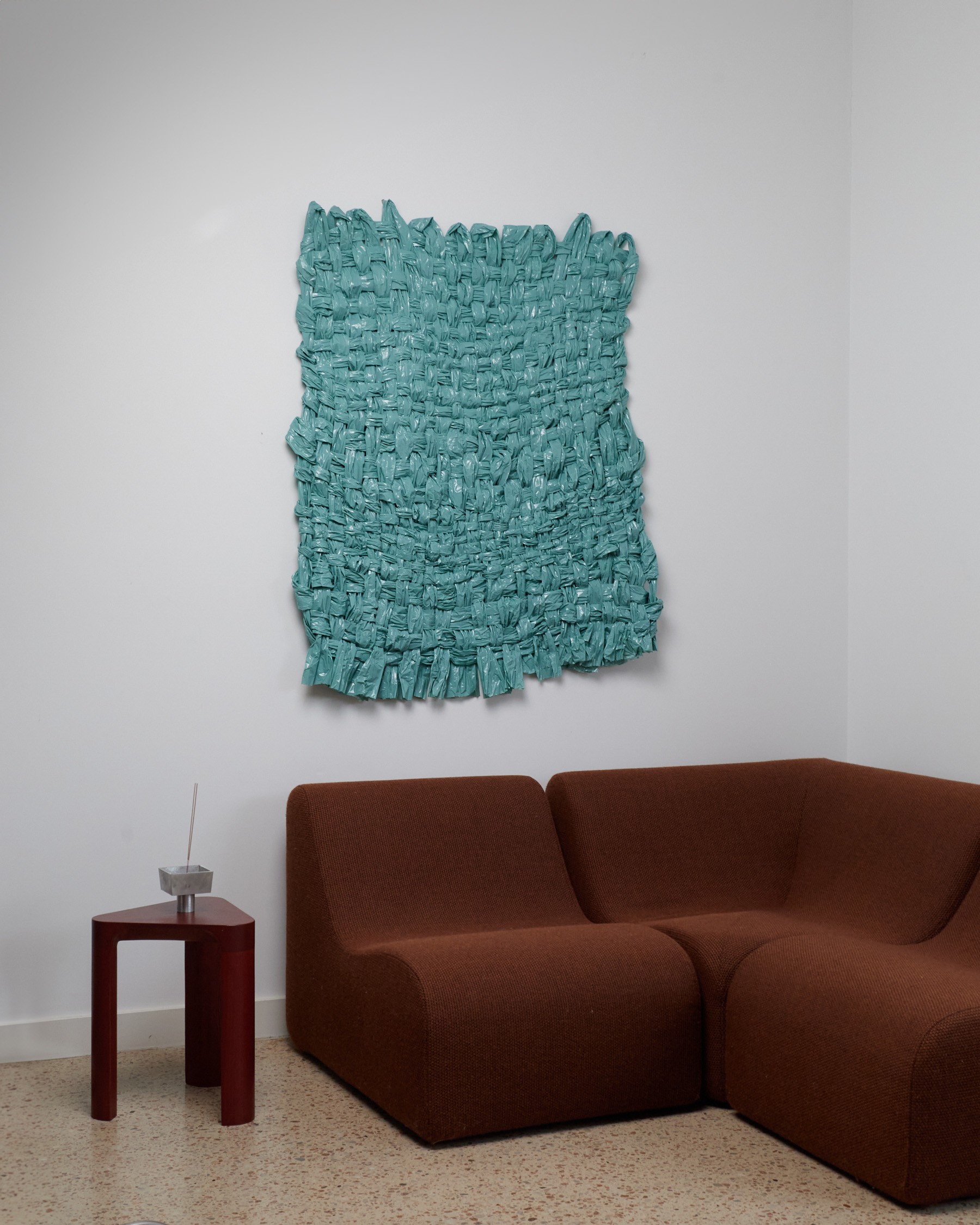
Should Art Match Your Interiors?
On collecting for the spaces we live in and why the best relationships between art and interiors aren't always the most obvious ones.
WRITTEN BY FOUNDER/DIRECTOR IVY ROSE RITCHENS
There is a particular question that comes up often when I am sourcing art for a home.
Does it need to match?
Usually, this means, should the colours in the artwork relate to the sofa? Do we need something of a certain scale for that empty wall? Is there already too much colour in the room? Does the frame need to relate to the timber joinery?
I don't believe an artwork should be chosen simply because it matches a room. Art isn't a cushion and reducing it to a final decorative layer tends to flatten both the artwork and the interior around it. But I also don't subscribe to the idea that art and interiors should exist completely independently of one another.
The best rooms, at least to me, feel like conversations which, at their best, have moments of both harmony and contrast. A very minimal room might benefit from something unruly, while a highly decorative interior might need an artwork with enough quietness to hold its own. What matters is the relationship.
Buy the artwork. Find the wall later.
I've never stopped a client, or myself, from buying an artwork simply because we didn't have the exact wall in mind. There are practical considerations, of course. But a genuine connection with an artwork can be surprisingly rare. Sometimes you see something and immediately want to keep looking at it. It makes you feel something, or perhaps introduces an idea you hadn't considered before. It might even be the first indication of where your collection wants to go next. I think those moments are worth listening to If the work is right and the opportunity is there, I would much rather find somewhere for it to live than walk away because we haven't identified its exact position on a floor plan because if you genuinely love looking at something, your home is unlikely to be worse for having it in it.
And of course, one of the great things about art is that it isn't a permanent fixture. It can be moved! Works move between houses, encounter different furniture and sit alongside acquisitions that didn't exist when they were first purchased.
Cohesion isn't the same thing as matching
Good curation, whether we're talking about a collection or an interior, is the ability to bring quite different elements together in a way that feels considered. That doesn't require everything to speak the same visual language.
A contemporary artwork can thrive within a very traditional interior, just as something rough and heavily textured can sit beautifully against highly resolved architecture. An unexpected colour in an otherwise restrained room creates a moment and strange figurative work surrounded by subtle abstraction becomes the conversation piece.
The juxtaposition of these elements can be exactly what gives a home its personality. The skill is knowing where to create cohesion and where to let it go. It can take some trial and error and if spatial curation isn't your strong suit, this is also where professional guidance can be particularly useful. A good advisor or designer can help identify the less obvious relationships between artworks, furniture, objects and architecture, and understand where contrast might actually make the whole space feel more resolved.
A home should feel lived in
There is something very satisfying about a room where everything makes sense. There is also something slightly unnerving about a room where everything matches (IKEA showroom jump scare). The homes I am most drawn to feel accumulated and rarely feel as though they arrived fully formed. There are things collected while travelling, furniture from different periods, books that have actually been read, objects with stories attached to them and artworks purchased years apart. That distinction matters when thinking about art. If every artwork is selected only once the furniture is in place, and every acquisition is required to conform to the palette already established around it, you can end up with a very resolved room but perhaps not a particularly interesting collection. A home isn't a showroom. It should be allowed to evolve, and artwork is particularly good at creating that evolution.
Interiors change. Good art stays.
There is also a practical reason I encourage clients to look beyond the immediate interior when buying art. Your space will always change. Sofas are replaced after years of use; walls are repainted because of scuffs and marks; people move house, sometimes more often than you might think; and the dining table you were convinced you would own forever eventually finds its way onto Marketplace.
A meaningful artwork, however, can move through all of it. Particularly when a client is making a significant acquisition, I want the work to make sense beyond the wall we are currently considering. The question becomes less does this work above this sofa? and more do you want to keep looking at this artwork for the next twenty years? That doesn't mean disregarding the space an artwork will inhabit. Part of good art advisory is understanding both the collection and the physical environment it exists within.
The best collections aren't built around a decorating scheme. They develop slowly through things you respond to, artists you become interested in, unexpected opportunities and works you simply can't stop thinking about.
Sometimes the artwork fits perfectly into the home you already have but sometimes it pushes that home, and your collection, somewhere you hadn't planned to go.